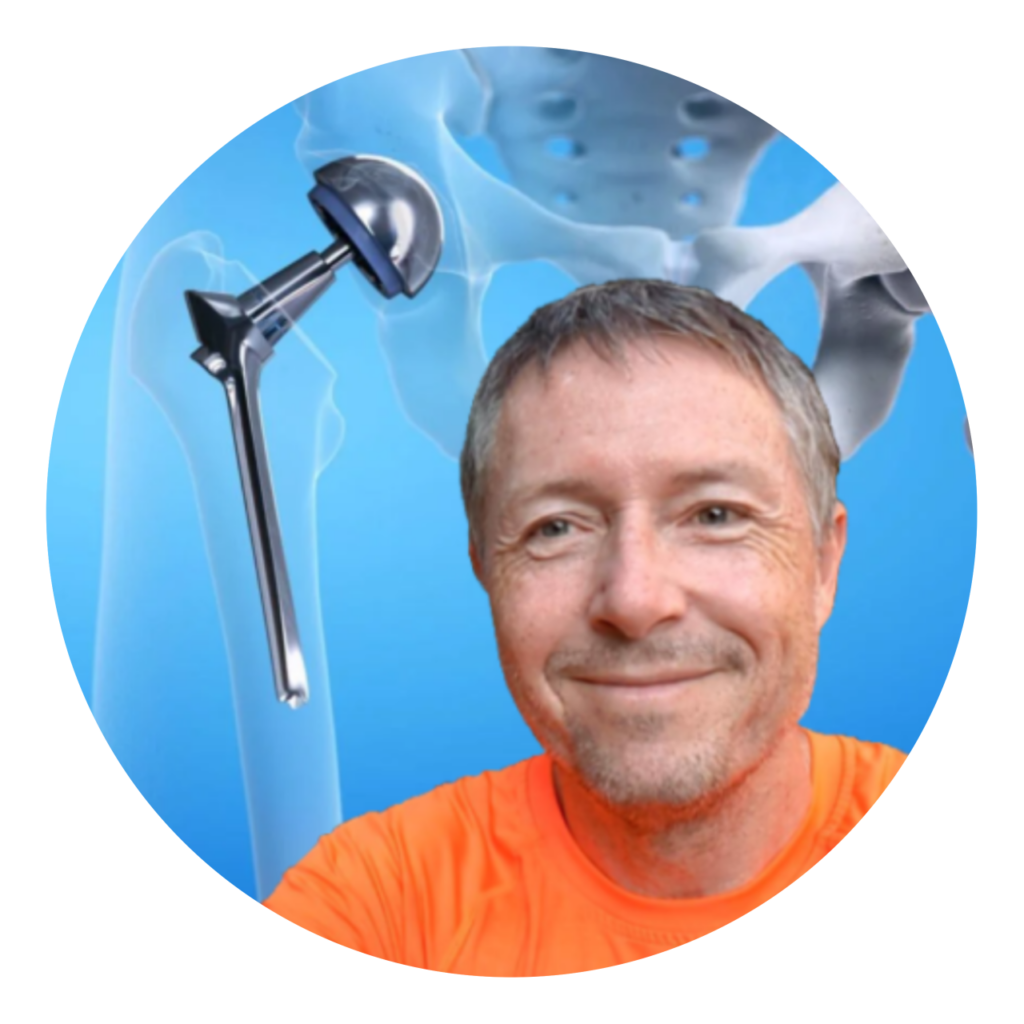

👉Click here to watch on YouTube
Prepare for total hip replacement with practical tips on recovery expectations, caregivers, fitness, essential supplies, home safety, and planning for a smoother recovery.
Video Transcript
Pre-Op Checklist for Total hip Replacement
I had my total hip replacement in January 2023, at the age of 55. My mother, who was 78 years old, had her total hip replacement about eight months after me, in September 2023.
If you’re facing total hip replacement, first and foremost, have realistic expectations.
Have Realistic Expectations About Surgery
Everyone’s hip journey is different, and all these tips and all this information will vary depending on your age, fitness level, other health problems, the skill of your surgeon, etc.
You might have a dream recovery, but plan for something more realistic. If your recovery is better than expected, you can celebrate. But if your recovery is slower or more difficult than you planned for, it can cause additional headaches while you’re still trying to recover.
Find a Caregiver Before Hip Replacement
Find a caregiver to help you for the first week or three post-op. The actual amount of time you’ll need a caregiver’s help will depend on the factors I just mentioned.
Don’t try to tough it out by yourself unless you absolutely have to. Before surgery, be extra nice to your caregiver. Make some deposits in that emotional bank account because, after surgery, you’re going to be making some withdrawals!
About Pete’s Hip Vlog
Did you know that Pete’s Hip Vlog has become one of the most comprehensive resources on the internet for total hip replacement? It’s true. Follow the link in the video description, or go to HipVlog.org, to sign up for some great free resources . The My Hip Journey email system will send you timely reminders and information throughout your hip journey.
Fun fact: Over 2,000 total hip replacements are performed every single day in the U.S. alone. That’s a whole lot of hip replacements.
So, if you find my content helpful, please share it with friends and family. Share it on social media. Share it with your surgeon. Helping people is my passion, so thanks in advance for helping spread the word.
Plan Time Off Work
Plan to take as much time off work as you possibly can. When you return to work, plan to do it gradually by starting off part-time.
If your job involves a lot of sitting, sitting can put a lot of strain on your new hip and on the incision, so it’s not recommended for long periods of time.
Get Child and Pet Care for After Your Surgery
If you have pets or children, plan for some help for several months post-op.
You won’t want to pick up heavy objects, and that includes small children. You won’t want to walk large dogs, especially those that are a little bit frisky or might pull too much. You also won’t want to get down on the floor to change a litter box, etc.
Related video: NO RESTRICTIONS 6 Weeks After Total Hip Replacement? THINK AGAIN!
Complete healing after total hip replacement can take up to one full year. See this video for additional information.
Get Fit Before Surgery
Recovery will take a lot of time, effort, and focus for several months after surgery. If you want the best possible outcome, get as fit as possible before surgery. This will pay huge dividends in your recovery.
Strengthen your upper body before surgery because, for several weeks after surgery, you’re going to need that upper-body strength to do things without using your operative leg.
Things you might take for granted, like getting up and down off the toilet, will require some preparation.

Practice, Practice, Practice Before Surgery
Practice doing everyday things without using your operative leg at all. You’ll see what I mean!
Know what to expect during surgery and recovery. It can be helpful to watch some of my Hip Vlogs or join support groups on Facebook and other platforms.
Playlist: Need to Know
Here’s a good video to start with:
Related video: Survive the First Week After TOTAL HIP REPLACEMENT
Know When You Can Drive After THR
You will not be able to drive for two to six weeks, depending on many factors.
For example, in the UK, by law, you cannot drive for six weeks after total hip replacement.
Understand Your Medical Insurance
Make sure you understand your insurance and how it will work with your surgeon, the hospital, your physical therapist, and aftercare.
This is especially important if you’re helping an elderly relative through this process.
In my mom’s case, she told us that she had Medicare and a gap insurance policy. So, we educated ourselves and planned based on that information. But we discovered that, in reality, she had a Medicare Advantage plan in an HMO.
That added a lot of headaches and extra work for my sister and me, including delays in getting her admitted to an inpatient rehab facility, etc.
Take Care of Dental and Medical Issues
Take care of any dental work, but be sure to check with your surgeon about any precautions.
Address any pre-existing medical conditions that could hold up your surgery or delay your release from the hospital.
Ask When to Stop Medications Before Hip Surgery
Ask your surgeon when you’ll need to discontinue any medications you’re taking, and be prepared to challenge your surgeon if any of this concerns you.
They often overgeneralize precautions, but you are a unique individual, and every medication is different.
I was freaked out when the hospital told me that I would have to discontinue all my medications two weeks before surgery. However, this video provides an example of how I researched the issue and challenged this advice.
Practice Sleeping on Your Back Before You Have Surgery
If you’re a side sleeper, train yourself to sleep on your back.
Although I was able to sleep on my non-operative side immediately after surgery and for several weeks thereafter, sleeping on just one side when I was used to alternating back and forth caused some problems.
For example, the arm I was lying on really hurt, and I developed some tendonitis in my elbows as a result.
This next section covers things you should consider as you get closer to your surgery date.
Buy Items to Help Your Recovery
Because our recoveries are all different, you might not need all these items. However, it’s good to be aware of them and think through whether you might need them.
Thankfully, Amazon can deliver most items in one to two days. If you get something and decide not to use it, they have a pretty good return policy.
Things to Buy Before Hip Replacement
- A wedge pillow for elevating your legs.
- A grabber, or maybe two: one for upstairs and one for downstairs.
- Magic gel ice packs specifically designed for hips.
- Optionally, you could consider an ice machine, but you need to make sure you get the proper pads for your hips. While ice machines can be expensive to purchase, my understanding is that you can buy them used or might be able to rent them. Check with your surgeon’s office.
- A toilet riser or a comfort-height toilet.
- Handles near your toilet so you can get up and down easily using your upper-body strength rather than your operative leg.
- A crossbody bag to carry things safely when you’re using crutches or a walker.
- If your surgeon has you start with a walker, you can get a tray for it.
- If you’ll be required to wear compression socks after surgery, buy better ones than what they’ll give you at the hospital. You can see what I thought of my compression socks in this video.
- For ladies, body-shaping leggings several weeks after surgery can help bring down swelling.
- A long-handled sponge to wash your legs and feet when showering.
- For ladies, loose-fitting dresses are great. They make it much easier to ice your hip and do other things.
- You may need different underwear so the elastic doesn’t go over your incision. Maybe boxer briefs.
- There are a lot of medications to keep track of after surgery, and many are taken at different intervals. Get a good pill organizer or a notepad and pen to keep track of what you need to take and when.
- A shower chair.
- Stock up on prune juice because constipation is a real problem.
- For work-from-home office folks, a lap desk with an angled top is great for working while elevating your legs.
- Make sure you have shoes that are both easy to slip on and off and secure while wearing them. Personally, I just loosened the laces on my regular tennis shoes.
Do not wear sandals, slippers, Crocs, or flip-flops, and definitely nothing with heels.
Have These Items by Your Bed
Here are some ideas for things to have on a table beside your bed:
- Water
- Lip balm
- Nail clippers
- Kleenex
- Pen and paper
- A watch
- Cell phone and phone charger
- Earbuds
- Pills and medications
- A strap to pull your leg into bed
- A cane, crutches, or walker nearby
- Extra pillows
- A garbage can
- A few non-perishable snacks
- Eyeglasses and eyeglass cleaner
- Hand sanitizer
- A channel changer
Another great idea is to get something like an umbrella stand and put it beside your bed to hold crutches, leg lifters, etc.
Practice Some More!
It might seem strange, but it’s actually very helpful to practice before you have surgery.
Do a test run of your toilet riser. Do some laps with your walker or crutches. Get comfortable with your grabber and dressing aids. Figuring out how they work with post-op brain can be difficult!
My surgeon told me to practice in advance with the forearm crutches they fitted for me, and I have to say it was great advice.
During those practice laps, identify tripping hazards and remove any rugs that could become hazards when you’re groggy.
If you’re planning to sleep on a different side of the bed or wear different shoes post-op, try to make these changes as soon as possible beforehand so you can get used to them and avoid any risk of tripping or falling, especially if you have to get up late at night.
Pack for Surgery
Pick out the clothes you’ll wear to and from the hospital in advance.
Choose bottoms that are loose and comfortable and will be somewhat warm because surgical centers can be cold.
Organize
Reorganize the things you use daily so they’re within easy reach. For example, clothing and coffee pods, things like that.
Make sure you can grab them easily and don’t have to stretch, reach, or bend down to get into a low drawer.
Find a Place to Rest After Total Hip Replacement
Decide where you’re going to sit or rest for a few days after surgery. Will it be your own bed, the living room couch, or will you bring your bed downstairs?
Where are you going to bum out for a few days?
Some surgeons recommend lying on a flat surface, either propped up or not, as the best and safest position for your hip and incision. So, don’t plan on sitting for long periods in chairs or recliners.
You’ll want a firm surface. If your couch or mattress is squishy, or if you have a memory foam mattress, you might want to look at alternatives.
Keep Snacks Nearby
Once you’ve decided on a spot, set up a snack station there.
You’ll be so happy to have at least a few things you can grab without having to rely on someone else.
Here are some snack suggestions:
- Dried fruit
- Nuts
- Protein bars
- Fruit snacks
- Apples
- Bananas
If you can add a mini fridge or a cooler, consider string cheese, hard-boiled eggs, yogurt, etc.
Set Up a Place for Deliveries
Finally, put a table and a sign outside your front door for deliveries.
Thanks for watching today’s video! I’d like to thank the many folks on the various hip forums on Facebook who contributed their collective wisdom to these tips today.
Also, you might want to join my hip replacement support group on Facebook.
Hey, here’s a fun fact: over 2,000 total hip replacements are performed every single day in the US alone. That’s a whole lot of hip replacements!
If you found my content helpful, please share it with friends and family. Share it on social media, and share it with your surgeon. Helping people is my passion, so thanks in advance for helping spread the word.
Explore all the free resources and helpful information throughout your hip journey by joining the Pete’s Hip Vlog community and subscribing to my YouTube channel, Pete’s Hip Vlog.
And remember, you’re in charge of your own health!
Pete
⚕️ Medical Disclaimer
I am not a healthcare professional. Content on Pete’s Hip Vlog is based on my personal hip replacement experience, research, and conversations with our recovery community. It is for general informational and educational purposes only and is not medical advice, diagnosis, or treatment.
Everyone’s recovery is different. Consult your healthcare professional about your individual circumstances, and never delay or disregard medical advice based on content you watch or read here. For concerning symptoms or a possible medical emergency, seek appropriate medical care promptly.